
Welded steel mill chain
The chain for the roughest conveying there is: welded construction, heat-treated steel, and ultimate strengths to 92,000 kgf for scraper, drag and bulk lines.
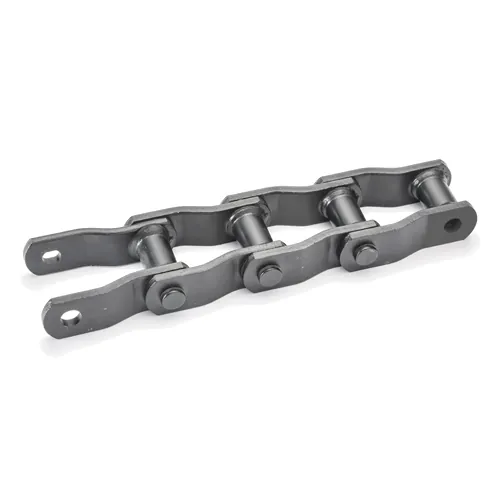
Built by welding, not press-fitting
Precision roller chain is assembled; welded steel chain is fabricated. The sidebars are welded to the barrel, the whole link is heat treated, and the result is a chain that shrugs off the impact, grit and corrosion that destroy roller chain. It gives up speed and precision, which this duty doesn't need.
It is the standard answer for scraper and drag conveyors, waste and residual-handling lines, biomass and forest-products plants, and slow heavy conveyors in aggregates and recycling: anywhere the duty is measured in years of abuse rather than metres per minute.
The WR / WH range
In the chain number: H = all parts heat treated, R (prefix) = heat-treated pins only, X = induction-hardened pins, HD = heavy duty. Suffix: -C cotter pins, -R rivet pins.
| Chain | Pitch (mm) | Ultimate strength (kgf, min.) | Weight (kg/m) |
|---|---|---|---|
| WR78-R | 66.27 | 9,530 | 6.2 |
| WH78-R | 66.27 | 10,918 | 6.2 |
| WR82-R | 78.10 | 10,210 | 7.2 |
| WH82-R | 78.10 | 13,380 | 7.2 |
| WHX82HD-R | 78.10 | 17,240 | 12.7 |
| WR124-C | 101.60 | 17,240 | 12.4 |
| WH124-C | 101.60 | 22,900 | 12.4 |
| WH124HD-R | 103.20 | 36,316 | 22.0 |
| WHX124HD-R | 103.20 | 55,306 | 22.0 |
| WH106-C | 152.40 | 22,860 | 10.11 |
| WH106HD-R | 153.67 | 55,290 | 17.4 |
| WR132-C | 153.67 | 28,140 | 20.0 |
| WH132-C | 153.67 | 38,580 | 20.0 |
| WHX132-C | 153.67 | 38,580 | 20.0 |
| WH150-C | 153.67 | 38,580 | 25.0 |
| WH155-C | 153.67 | 50,000 | 26.9 |
| WR157-C | 153.67 | 56,320 | 29.0 |
| WH157-C | 153.67 | 56,320 | 29.0 |
| WHX159-C | 155.57 | 92,724 | 37.0 |
Full dimensional tables (sidebar heights, pin diameters, barrel dimensions) available on request. Attachments built to your spacing in-house; matched sprockets supplied. Supplied to order — contact us for current lead time.
Download the spec datasheet (PDF)Full product catalogue →
We match welded chain from the worn link
A real one from the bench: a worn welded-steel link measured up — sidebar length and hole centres, barrel profile and bore — and matched to the right chain. Send us your link, or photos with a tape measure in shot, and we do the rest.
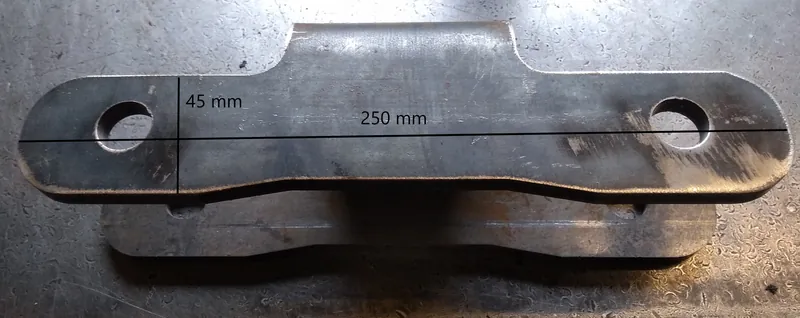
Length and hole centres identify the pitch and series.
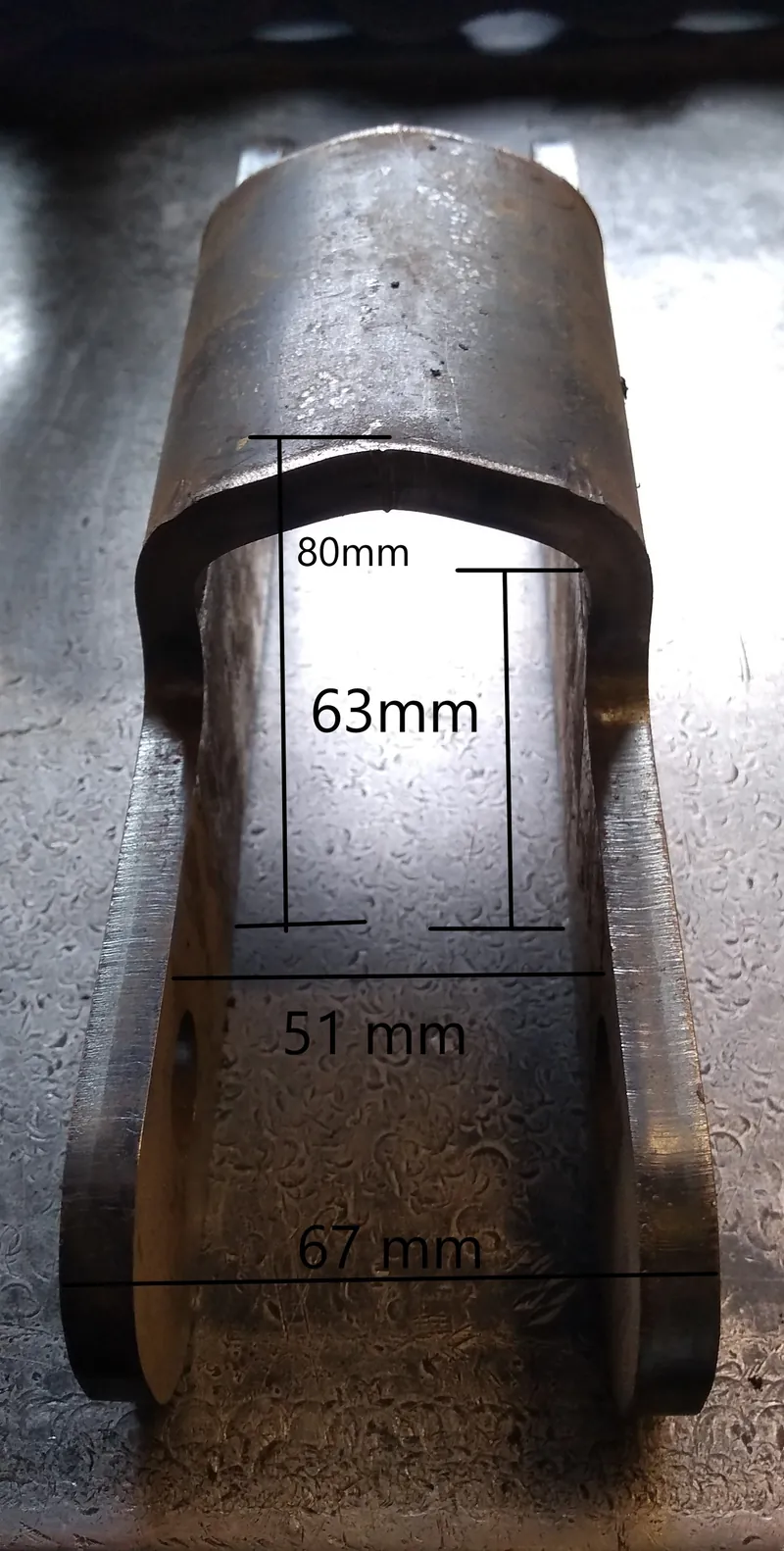
Barrel widths and bore confirm the construction and the sprocket it runs on.
Rough duty, slow speed, long life
- Scraper and drag conveyors in waste and residuals
- Biomass, bark and forest-products handling
- Aggregates, recycling and demolition plant
- Ash and clinker conveying
- Anywhere roller chain keeps failing on impact and abrasion. See the fault finder
Welded steel chain conveys; it does not transmit power at speed. For loaded drives, look at high-strength (HV) chain instead. Tell us the duty and we will point you at the right construction.
Straight answers
What is welded steel chain used for?
Rough, heavy, abrasive conveying where precision roller chain would not survive: scraper and drag conveyors, waste and residual handling, biomass and forest-products lines, and slow heavy-duty conveyors in aggregates and recycling.
What do the WR, WH and WHX codes mean?
The letters describe the heat treatment and pins: H means all parts are heat treated, R means heat-treated pins only, X means induction-hardened pins, and HD is the heavy-duty construction. The suffix gives the pin type: C for cotter pins, R for rivet pins.
Can you supply attachments and sprockets for welded steel chain?
Yes. Tell us the conveyor and the spacing. Attachments are built to your drawing in our Malvern workshop, and sprockets are supplied machined to our specification to suit.
Conveyor eating chains?
Tell us the duty, the pitch and what keeps failing, and we will specify a welded steel chain that stops the cycle.